
3-Days Samburu National Reserve Safari : Samburu National Reserve is one of Kenya’s most rewarding wildlife destinations — and one of its least crowded. While the Masai Mara draws tens of thousands of visitors each year, Samburu remains beautifully remote, offering an intimate and unhurried safari experience in a landscape that is unlike anything in southern Kenya.
Sitting along the banks of the Ewaso Nyiro River in Kenya’s semi-arid north, Samburu is home to a collection of wildlife species found nowhere else on a standard Kenya safari circuit. The Samburu Special Five — Grevy’s Zebra, Reticulated Giraffe, Beisa Oryx, Somali Ostrich, and Gerenuk — are endemic to the dry northern landscapes and cannot be spotted in the Masai Mara or Amboseli. If you want to see these extraordinary animals, Samburu is where you come.
Beyond the wildlife, Samburu offers something equally compelling: the people. The Samburu community — a semi-nomadic pastoralist people closely related to the Maasai — have lived in and around this reserve for generations. A visit to a Samburu village on this three-day safari gives you a genuine window into their culture, traditions, and way of life that most Kenya visitors never experience.
This three-day Samburu safari from Nairobi is the perfect introduction to northern Kenya wildlife — combining two full days of game drives along the Ewaso Nyiro River with a Samburu cultural visit and the rare opportunity to photograph the Special Five in their natural habitat.
Why Visit Samburu National Reserve?
Rare wildlife found nowhere else in Kenya.
The Samburu Special Five are the headline attraction — five species uniquely adapted to the semi-arid north that no southern circuit safari can offer. Spotting all five in a single visit is entirely achievable in Samburu and is a genuinely thrilling wildlife experience.
Fewer crowds, more intimate game drives.
Samburu receives a fraction of the visitor numbers of the Masai Mara. Game drives here feel private and unhurried — no convoys of vehicles surrounding a cheetah, no radio chatter coordinating sightings. Just you, your guide, and the wildlife in open, dramatic landscape.
The Ewaso Nyiro River.
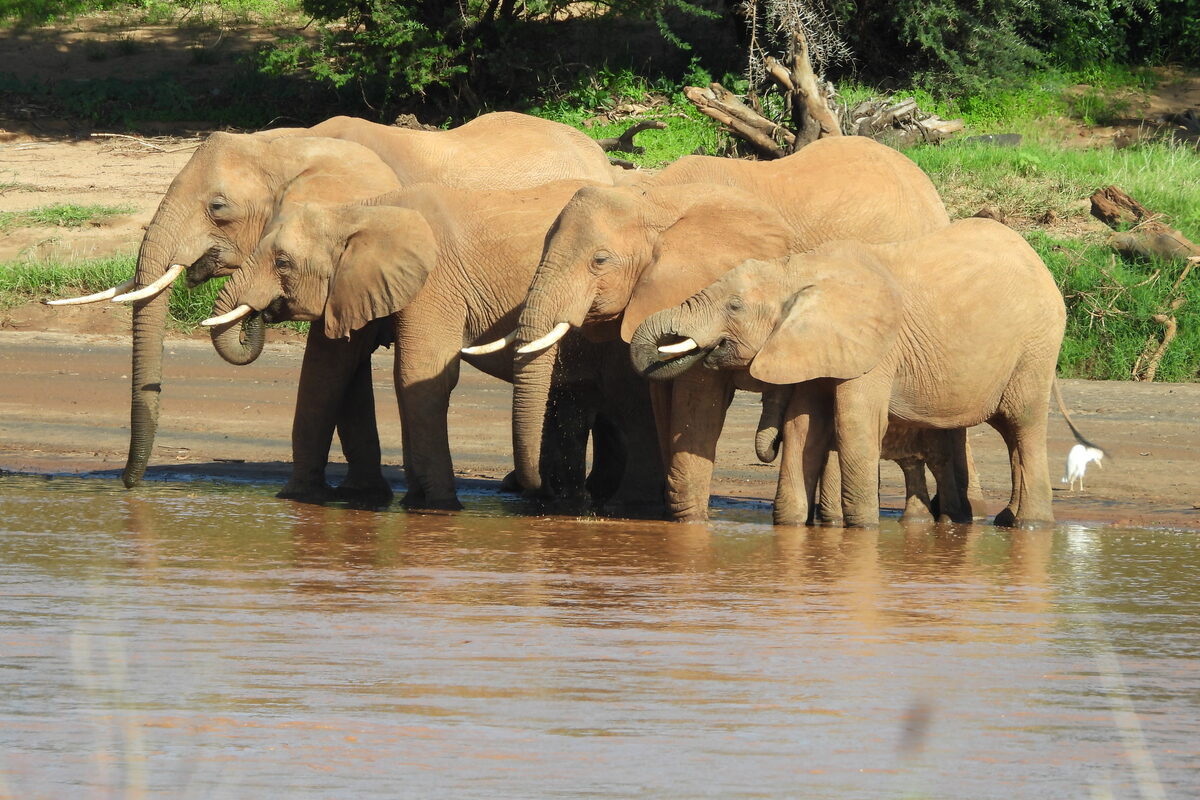
A permanent river cutting through an otherwise semi-arid landscape, the Ewaso Nyiro is the lifeblood of Samburu. Elephant herds, crocodiles, leopards, and a remarkable diversity of birdlife all concentrate along its banks — making it one of the finest wildlife watching rivers in East Africa.
Genuine cultural encounter.
The Samburu people are one of Kenya’s most distinctive communities — known for their elaborate beadwork, warrior culture, and deep connection to their livestock and landscape. A village visit on Day 3 of this safari is a genuine cultural exchange, not a staged performance.
Outstanding photography.
The Samburu landscape — dry acacia savannah, the green ribbon of the Ewaso Nyiro, dramatic red soil, and extraordinary light — is one of Kenya’s finest photography environments. The open vehicles and patient, knowledgeable guides give photographers the access and time they need.
The Samburu Special Five
Samburu National Reserve is the best place in Kenya to find five wildlife species found nowhere else on the standard safari circuit:
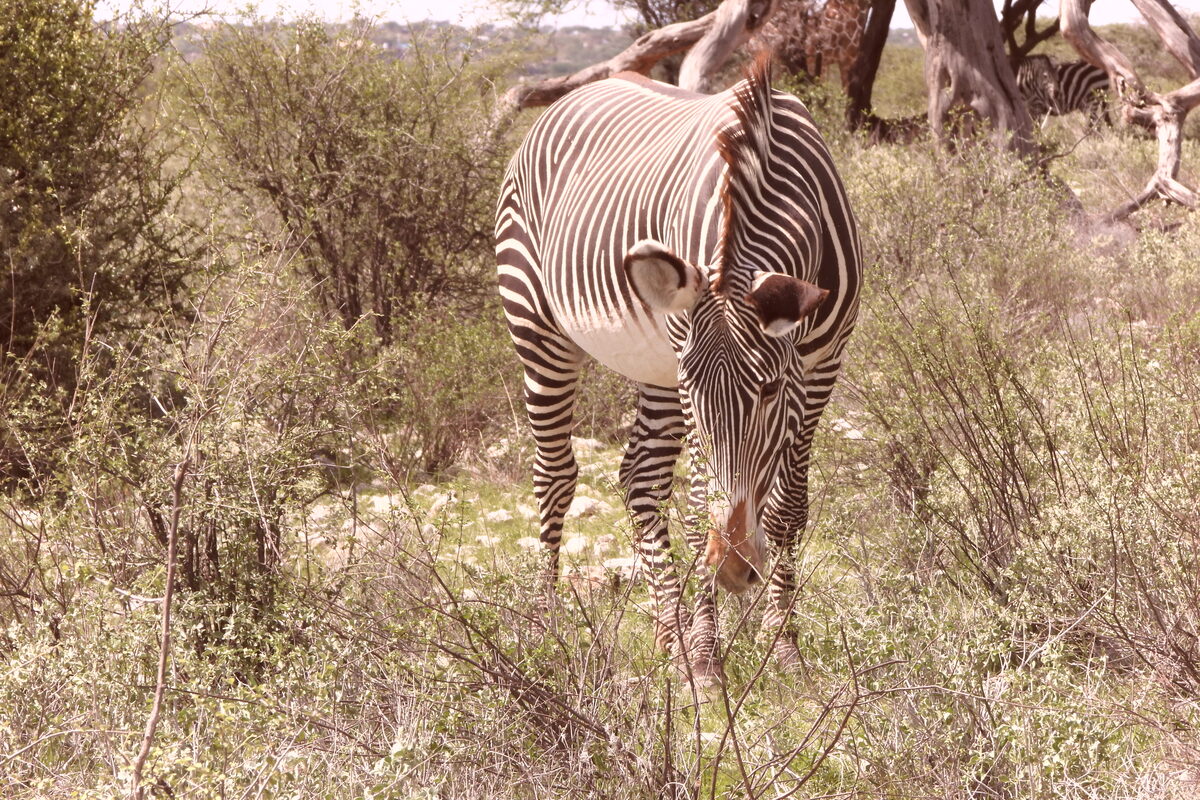
Grevy’s Zebra
The world’s largest wild equid and one of Africa’s most endangered animals. Distinguished from the common plains zebra by its narrow, closely-spaced stripes, large rounded ears, and clean white belly. Listed as Endangered on the IUCN Red List with fewer than 3,000 individuals remaining globally.
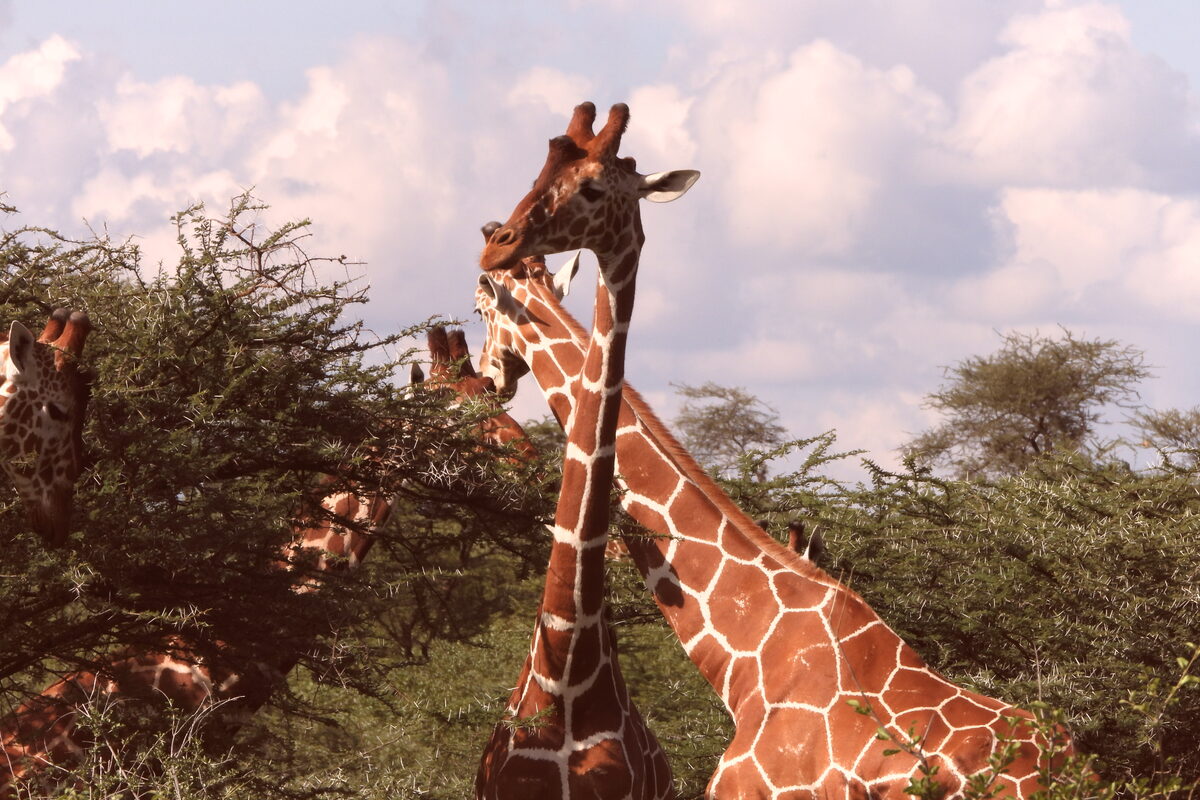
Reticulated Giraffe
The most visually striking of all giraffe subspecies, with a coat of large, clearly defined chestnut polygons separated by clean white lines. Samburu has one of the world’s strongest populations. Seeing a tower of Reticulated Giraffes moving through the fever trees at dawn is one of the defining images of a northern Kenya safari.
Beisa Oryx
A powerful desert antelope with long straight horns and a striking black-and-white facial pattern. Its remarkable ability to raise its body temperature during the heat of the day — reducing water loss by avoiding the need to sweat — makes it one of Africa’s most perfectly desert-adapted animals.
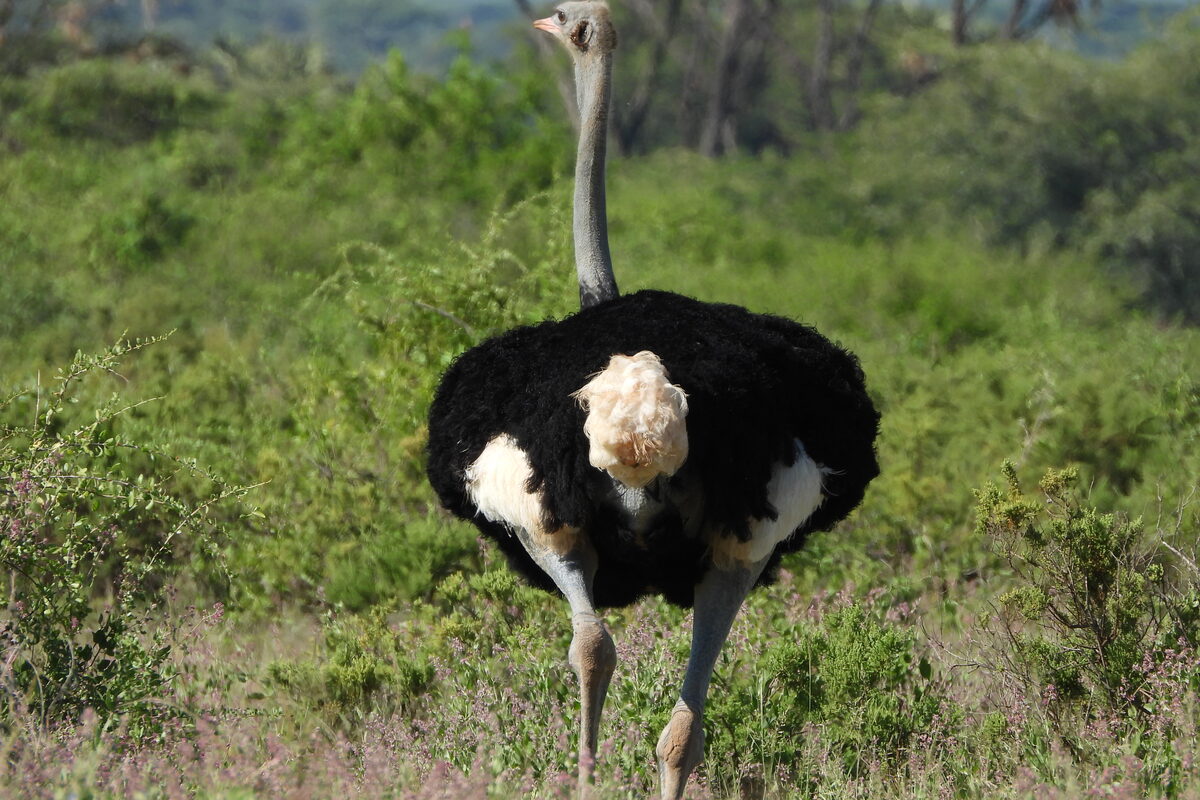
Somali Ostrich
Recently recognised as a species distinct from the Common Ostrich, the Somali Ostrich is found only in the Horn of Africa region. The blue-grey colouring of its neck and thighs — particularly vivid in males during breeding season — makes it immediately distinguishable from its southern cousin.
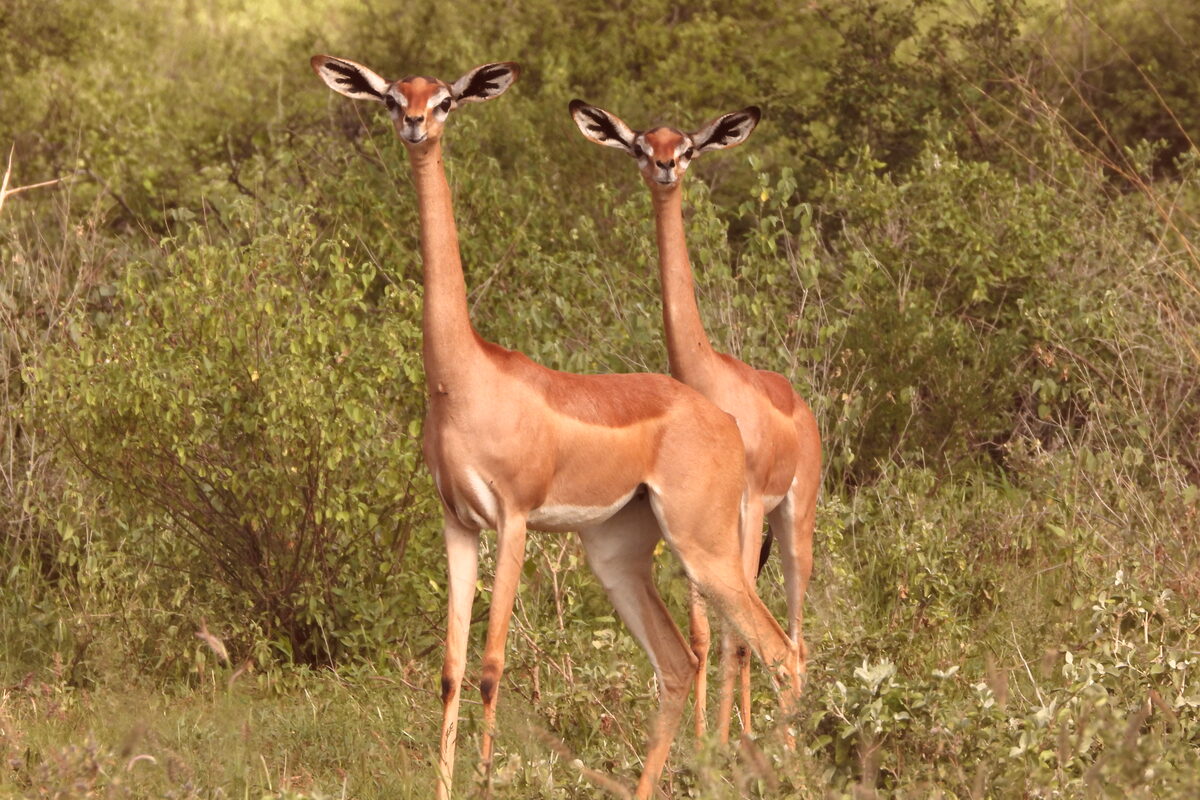
Gerenuk
Perhaps the most extraordinary of the five. A slender, long-necked antelope that browses standing fully upright on its hind legs, reaching vegetation several feet above what any other antelope can access. Its name means “giraffe-necked” in Somali — and once you see one feeding upright against an acacia sky, you understand why immediately.
3-Day Samburu National Reserve Safari Pricing
This is a private safari — your group travels exclusively in your own vehicle with a dedicated driver-guide throughout.
| Group Size | Price Per Person |
| 1 Person (Solo Traveller) | USD 2,200 |
| 2 People | USD 1,650 per person |
| 3 People | USD 1,400 per person |
| 4 to 6 People | USD 1,250 per person |
All prices are per person for the full 3-day safari. Prices are quoted in USD and valid for the current season.
Payment: A 30% deposit per person confirms your booking. The balance is due 14 days before departure. Deposits are valid for 12 months in case of postponement.
Detailed 3-Day Samburu National Reserve Safari Itinerary
Day 1 — Nairobi to Samburu National Reserve (Approx. 310 km)
Your Samburu safari begins with a morning departure from Nairobi. Your Ahambi Tours driver-guide collects you from your hotel or residence and you head north through Kenya’s central highlands — the landscape gradually transforming from green farmland to open acacia savannah as you approach the northern frontier.
The drive to Samburu takes approximately 5 to 6 hours depending on traffic and road conditions. As you approach the reserve, the red-earthed landscape of northern Kenya begins to dominate — dry, dramatic, and immediately different from the highlands behind you.
Arrive at Ashnil Samburu Camp in time for lunch — settle in, refresh, and prepare for your first game drive in the late afternoon.
Your first game drive introduces you to Samburu’s extraordinary wildlife. The Ewaso Nyiro River is your guide — follow it and the wildlife follows the water. Elephant herds gather at the banks in the late afternoon. Crocodiles bask on the sandy beaches. Reticulated Giraffe browse the fever trees. And if the light is right and your guide knows the territory — it almost certainly is and they almost certainly do — your first Gerenuk standing upright against the evening sky is one of those wildlife moments that stays with you permanently.
Dinner and overnight at Ashnil Samburu Camp.
Distance: Approx. 310 km Driving time: 5–6 hours Accommodation: Ashnil Samburu Camp Meals: Lunch, Dinner
Day 2 — Full Day in Samburu National Reserve
A full, unhurried day in Samburu — the finest day of game viewing the reserve offers.
The morning game drive begins at first light — the best time in Samburu, when the air is cool, the light is golden, and the wildlife is most active. Predators are moving. Lion prides that have been hunting through the night are returning to shade. Leopards — Samburu has an excellent leopard population and your guide knows where to look — may be visible in the acacia canopy above the river. Cheetah, if you are fortunate, hunt the open plains in the morning hours.
During the heat of the midday, return to Ashnil Samburu Camp for lunch and rest — the camp sits directly on the Ewaso Nyiro River and the midday hours are ideal for birding from the camp itself, with African Fish Eagle, Grey Heron, Goliath Heron, and numerous bee-eater and roller species regularly visible from the riverbank.
The afternoon game drive picks up where the morning left off. As the temperature drops and the light turns amber, the wildlife becomes active again. This is the hour for the Samburu Special Five — the Grevy’s Zebra come to the river, the Reticulated Giraffe move through the acacia, the Beisa Oryx stand impossibly still on the open plains. And as the sun drops toward the horizon and the Ewaso Nyiro turns copper in the last light, Samburu reveals itself as one of the finest photographic environments in all of East Africa.
All meals and overnight at Ashnil Samburu Camp.
Accommodation: Ashnil Samburu Camp Meals: Breakfast, Lunch, Dinner
Day 3 — Samburu to Nairobi (Approx. 310 km)
The final morning begins before breakfast — an early game drive through Samburu in the cool morning air, the best time to spot predators and catch the wildlife at its most active before the heat of the day.
After the morning drive, return to camp for breakfast before a genuine highlight of the entire safari: a visit to a local Samburu village. The Samburu people are one of Kenya’s most culturally rich communities — semi-nomadic pastoralists closely related to the Maasai but with their own distinct identity, language, and traditions shaped by the demands of this drier, more demanding landscape. Your guide will facilitate a genuine cultural exchange — not a staged performance — where you learn about the community’s cattle herding traditions, their elaborate beadwork and its significance, their age-set social structure, and their relationship with the reserve and its wildlife.
After the village visit, depart Samburu for the drive south to Nairobi, arriving in the late afternoon.
Distance: Approx. 310 km Driving time: 6–7 hours Accommodation: None — return to Nairobi Meals: Breakfast
Accommodation
Ashnil Samburu Camp is one of the finest camps in Samburu National Reserve — a well-established, comfortable camp sitting directly on the banks of the Ewaso Nyiro River. Accommodation is in spacious ensuite tented rooms with private verandas overlooking the river. The camp’s riverside location means wildlife — elephant, crocodile, and a remarkable diversity of birdlife — is frequently visible from the camp itself without leaving your tent.
In the late afternoon, when the heat of the day begins to ease, elephant herds make their way down to the Ewaso Nyiro River directly in front of the camp. Watching them from your veranda — unhurried, with a cold drink and the sound of the river below — is one of those safari moments that no game drive can plan for. It simply happens, and it stays with you.
The camp has a swimming pool, restaurant, and bar — all overlooking the river. Meals are excellent and the camp team is professional and welcoming.
Accommodation is subject to availability and may be substituted with a comparable option. We will always confirm final accommodation at the time of booking.
What Is Included
- All ground transportation in a 4×4 safari vehicle with pop-up roof
- All accommodation as listed (2 nights at Ashnil Samburu Camp)
- All meals as indicated in the itinerary
- Services of an experienced, licensed driver-guide throughout
- Samburu National Reserve park entry fees
- Samburu cultural village visit fees
- Drinking water throughout the safari
- Emergency medical evacuation cover
- All applicable government taxes
What Is Not Included
- Alcoholic and soft drinks
- Personal items, laundry, and tips
- Any activities not listed in the itinerary
Best Time to Visit Samburu National Reserve
Samburu can be visited throughout the year — but conditions vary by season.
Best months: June to October and January to March
During the dry season, wildlife concentrations are highest as animals gather around the permanent water of the Ewaso Nyiro River. The Samburu Special Five are most reliably encountered, game drives are most productive, and the landscape is most dramatic.
April, May, and November
Bring the long and short rains. The reserve is lush and green during these months and visitor numbers are low — making for a quieter, more private safari experience. Some tracks may be muddy but game drives remain productive. Contact us for current conditions before booking during these months.
Frequently Asked Questions abut the 3 Days Samburu National Reserve Safari
What makes Samburu different from the Masai Mara?
Samburu offers a completely different wildlife experience from the Mara. The Samburu Special Five — Grevy’s Zebra, Reticulated Giraffe, Beisa Oryx, Somali Ostrich, and Gerenuk — cannot be found in the Mara. Samburu also has significantly fewer visitors, making game drives more private and intimate. The landscape is semi-arid rather than open savannah — drier, more dramatic, and equally beautiful in its own distinctive way.
Can I see the Big Five in Samburu?
Samburu has lion, leopard, elephant, buffalo, and occasionally rhino — four of the Big Five are present and regularly encountered. Leopard sightings are particularly good in Samburu, where they are frequently seen in the acacia trees along the Ewaso Nyiro River. Rhino are rare but the reserve is part of the wider northern conservation landscape.
Is Samburu suitable for families and children?
Yes — Samburu is an excellent family safari destination. The reserve is uncrowded, game drives are relaxed and unhurried, and the Samburu Special Five — particularly the Gerenuk standing on its hind legs — are endlessly fascinating for children. The cultural village visit on Day 3 is also a genuinely engaging experience for younger visitors.
What wildlife can I expect to see?
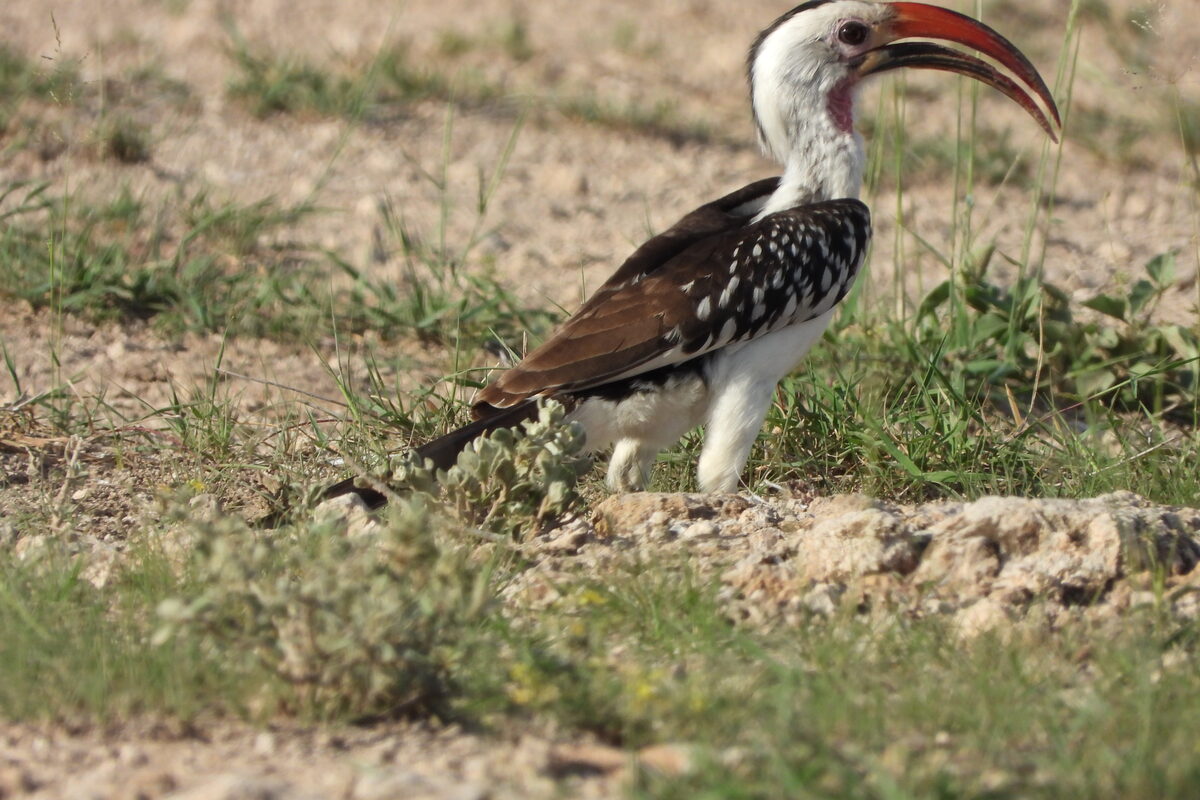
Samburu’s wildlife list includes the Samburu Special Five, elephant, lion, leopard, cheetah, African wild dog (occasionally), crocodile, hippo, baboon, vervet monkey, and a remarkable diversity of bird species including Vulturine Guineafowl, Somali Bee-eater, and Golden-breasted Starling — all northern specialists that cannot be found in southern Kenya.
Can I combine this Samburu safari with Mount Kenya or Northern Kenya?
Yes — Samburu is ideally positioned to combine with a Mount Kenya trek (Sirimon Gate is approximately 60 km from Samburu) or with a longer Northern Kenya safari to Lake Turkana and the Chalbi Desert. Ahambi Tours is based in Nanyuki — and can arrange seamless combined itineraries across all northern Kenya destinations. Contact us to discuss your specific interests and we will build the right combination.
What is included in the 3 days Samburu national reserve safari price?
All transport, accommodation, meals as listed, park fees, cultural village visit, driver-guide services, and government taxes. Not included: flights, visa fees, travel insurance, alcoholic drinks, personal items, and tips.
Why Book Your Samburu Safari with Ahambi Tours
Ahambi Tours is based in Nanyuki — at the foot of Mount Kenya and closer to Samburu National Reserve. Our driver-guides know the Ewaso Nyiro River, the reserve’s wildlife patterns, and the Samburu community personally — not from a guidebook but from years of working in and around northern Kenya.
We have been operating safaris in northern Kenya since 2013 and are TripAdvisor Travellers’ Choice Award winners for 2022, 2023, 2024,2025, and 2026. Our 4×4 Toyota Land Cruisers are equipped with pop-up roofs, cooler boxes, and all the equipment needed for productive, comfortable game drives in Samburu’s conditions.
This is a private safari — your group, your vehicle, your guide. We do not mix groups or share vehicles with other guests.
With Ahambi Tours, you are never a stranger.
Book Your 3-Days Samburu National Reserve Safari
WhatsApp: +254 725 727 167 📧 Email: [email protected] 🌐 Website: ahambitours.co.ke
30% deposit confirms your booking | Balance due 14 days before departure | Deposit valid 12 months